Marina Deportiva Alicante promotes a more sustainable marina model thanks to solar energy.
Solar energy to reduce carbon footprint: Marina Deportiva Alicante installs a photovoltaic plant with solar panels for self-consumption.

Solar energy to reduce carbon footprint: Marina Deportiva Alicante installs a photovoltaic plant with solar panels for self-consumption.
The transition to a more efficient energy model responds not only to international commitments regarding emission reductions but also to the need to manage natural resources more responsibly and optimize the facilities’ energy consumption.
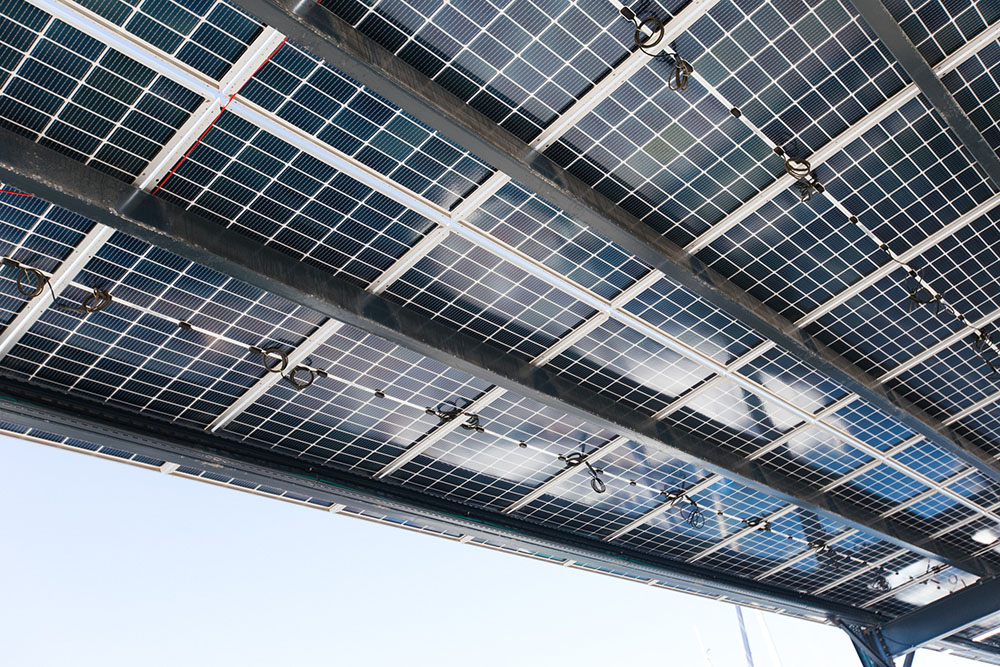
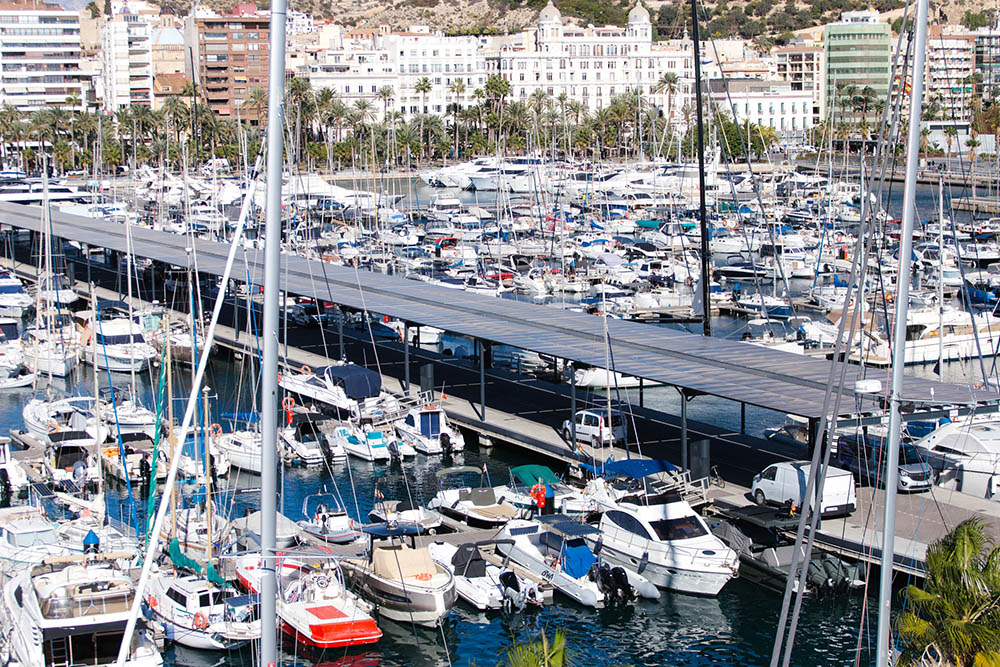
With this forward-looking vision, Marina Deportiva Alicante has implemented one of the most significant energy-efficiency upgrades at its facilities: a 367.2 kWp self-consumption photovoltaic plant—equipped with 680 bifacial solar modules—designed to supply clean energy to the marina’s common services.
This project represents a major step forward in the modernization of port infrastructure and demonstrates how technological innovation can help protect the Mediterranean environment without compromising the quality of services expected by boaters, businesses, and visitors.
Marinas maintain high levels of electricity consumption throughout the year. Lighting for piers and common areas, administrative offices, surveillance systems, communications, technical equipment, and other facilities all require a constant energy supply. Reducing reliance on the electrical grid through renewable energy generation is one of the most effective ways to lower the environmental impact of these facilities. For this reason, Marina Deportiva Alicante has opted for a photovoltaic self-consumption system that harnesses one of the province’s most abundant natural resources: the sun.
The province of Alicante enjoys some of the highest levels of solar radiation in Europe, making photovoltaic energy a particularly efficient solution for this type of facility.
The project was developed by Prosolia Energy, a company specializing in renewable energy generation and self-consumption solutions.
The installation boasts particularly notable technical specifications:
All generated energy is primarily used to power the port’s common facilities, thereby lowering consumption from conventional sources and reducing the carbon footprint associated with its operations.
In addition to the environmental benefits, this self-consumption model improves energy efficiency and contributes to more sustainable resource management.
One of the project’s most innovative aspects is the use of bifacial solar panels. Unlike conventional photovoltaic modules, which capture solar radiation only on their front side, bifacial panels generate electricity using both sides of the module. This allows for the utilization of not only direct solar radiation but also light reflected from the surfaces beneath the panels.
In the case of Marina Deportiva Alicante, the harbor water acts as a reflective surface, increasing the amount of radiation received by the modules and enhancing the installation’s energy performance.
This physical phenomenon is known as albedo—a concept widely studied in photovoltaic engineering—which describes a surface’s ability to reflect solar radiation. The marine environment offers particularly favorable conditions for this technology, enabling optimized energy production without the need to increase the installation’s footprint.
One of the project’s main objectives is to reduce the environmental impact resulting from the port’s energy consumption.
According to data published by Prosolia Energy, the plant will prevent approximately 133.11 tonnes of carbon dioxide (CO₂) emissions annually.
Reducing greenhouse gas emissions is a cornerstone of the energy transition driven by the European Union, which aims to achieve climate neutrality before the middle of the century.
Implementing renewable energy generation systems within port infrastructure contributes directly to this goal, fostering an economic model that is more sustainable and environmentally friendly.
Integrating renewable energy entails far more than a mere technological upgrade. It represents a new approach to marina management, where energy efficiency, innovation, and environmental protection are all part of a unified strategy.
The electricity generated by the photovoltaic plant powers various shared services, including:
This self-consumed energy reduces demand for grid electricity and improves the overall efficiency of the facilities.
The geographical location of Marina Deportiva Alicante offers significant added value for harnessing photovoltaic energy.
The high number of sunshine hours, combined with the Mediterranean climate and proximity to the sea, creates especially favorable conditions for this type of installation.
The use of bifacial modules allows these natural advantages to be leveraged by capturing more radiation reflected off the water’s surface.
The combination of solar radiation, advanced photovoltaic technology, and self-consumption makes this project an example of how to adapt energy solutions to the specific characteristics of a port environment.
Investments in renewable energy generate benefits that go beyond financial savings. Reducing emissions, improving energy efficiency, decreasing reliance on fossil fuels, and optimizing electricity consumption are part of a strategy that adds value to both the facility and society as a whole.
In the port sector, where operations are closely linked to the marine environment, this commitment takes on special significance.
Every step toward cleaner energy helps preserve the natural environment of the Mediterranean and fosters more responsible boating practices.
The installation of this photovoltaic plant underscores Marina Deportiva Alicante’s commitment to innovation and sustainability as key drivers of its development.
Thanks to a 367.2 kWp system—featuring 680 bifacial solar modules capable of harnessing both direct radiation and light reflected off the water—the marina generates renewable energy for its own shared facilities, thereby preventing the emission of approximately 133 tons of CO₂ annually.
Beyond the figures, this project demonstrates that renewable energy is already an integral part of the present-day recreational boating sector. Integrating technology, energy efficiency, and environmental respect is now a way to provide superior facilities, optimize available resources, and actively contribute to preserving the Mediterranean coastline for future generations.